
Dental Implant Process: What to Expect From Consultation to Crown
The dental implant process step by step begins with a conversation, not surgery. Your dentist at Fine Dentistry of Downtown Orlando will learn what you want to improve, review your health history, and look closely at your mouth. This visit helps determine whether an implant fits your needs and what the treatment may involve.
1. Start With the Dental Implant Consultation
Tell your dentist whether you are replacing one tooth, several teeth, or a tooth that has recently been removed. Mention pain, sensitivity, bleeding, medications, allergies, smoking, and conditions that may affect healing. These details help shape a treatment plan that is appropriate for you.
The examination covers more than the empty space. Your dentist will assess nearby teeth, gum health, the available jawbone, and how your upper and lower teeth meet. Healthy supporting tissues matter because the implant and crown rely on a stable oral environment.
Dental X-rays and, when appropriate, 3D scans give the dental team a clearer view of bone height, width, and nearby structures. Some people need treatment before implant placement because the jawbone is too thin or the gums are not healthy enough. Bone grafting, a sinus lift, tooth removal, or treatment for infection may be recommended.
2. Prepare for Implant Surgery
Preparation varies according to your oral health and the number of teeth being replaced. Active gum disease, untreated decay, and severely damaged teeth may need attention before an implant is placed. A bone graft adds material where more support is needed, while a sinus lift may be considered when the upper back jaw has limited bone below the sinus.
Your dental team will discuss the type of anesthesia or sedation, prescriptions, and any medicines that need special attention. Arrange a ride if sedation or medication could make driving unsafe, stock soft foods, and set aside time to rest. A little planning makes the first evening easier and reduces unnecessary errands.
3. Place the Dental Implant
Implant placement is the surgical stage in which a titanium post is positioned in the jawbone. If the tooth has not already been removed, extraction may happen before or as part of the planned treatment. After the area is numb or appropriately sedated, the dentist creates space in the jawbone and places the implant.
In selected cases, an implant can be placed during the same appointment as extraction, depending on infection, bone condition, and the ability to achieve stability. Mild soreness, swelling, or bruising can occur after surgery. Use only the pain relief and care measures recommended by our oral surgery team, and rest while the early healing process begins.
4. Allow Time for Osseointegration
After placement, the implant needs time to become firmly integrated with the jawbone. This healing stage, called osseointegration, is often the quietest part of the dental implant process, but it is essential. Bone gradually grows around the implant and helps create a stable foundation for the future crown. The timeline differs from person to person and can be affected by bone quality, grafting, and overall health.
Your instructions may include eating softer foods, cleaning gently, and avoiding pressure on the healing area. Some discomfort and swelling are common, particularly during the first few days. Call our office if you have severe or increasing pain, persistent bleeding, significant swelling, fever, drainage, or an implant that feels loose.
5. Attach the Abutment and Plan the Crown
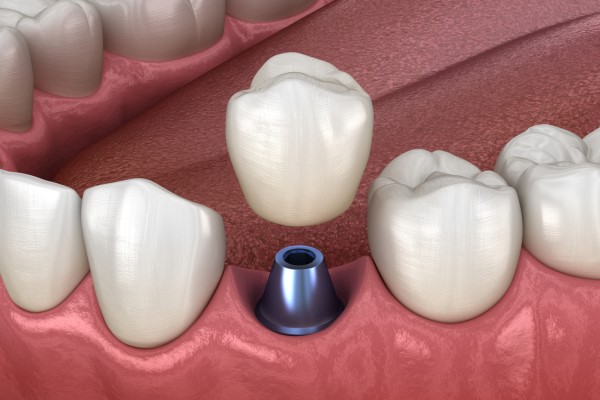
Once healing has progressed, the dentist evaluates the implant and begins planning the visible tooth. The abutment connects the implant to the crown, while impressions or scans capture the shape of your mouth. Your dentist may examine the tissues and assess implant stability before proceeding; if the implant needs more healing time, the abutment and crown will be delayed.
Traditional impressions or digital scans record the implant position, neighboring teeth, gums, and bite. The dental laboratory uses this information to make a crown that fits the space, matched to the color, shape, size, and position of your surrounding teeth through our cosmetic dentistry planning process.
6. Complete the Restoration With a Dental Crown
The crown is the visible part of the completed implant restoration. The dentist places the crown temporarily or tries it in to evaluate its contacts and appearance. You may be asked to bite, speak, or move your jaw so any pressure points can be identified. After the fit is approved, the crown is attached to the abutment, and minor adjustments can improve the way it meets the opposing teeth.
Understanding the Full Dental Implant Process Timeline
Some treatments take several months because extraction, grafting, implant healing, and crown fabrication may happen at different times. Others move more quickly when the bone and gums are ready. A simple overview can help put the stages in order:
| Stage | Main Purpose | What May Affect Timing |
|---|---|---|
| Consultation | Examine the mouth and plan treatment | Oral health and imaging findings |
| Preparation | Treat disease or build support | Grafting, extraction, or sinus lift |
| Implant placement | Position the implant in the jawbone | Bone condition and surgical needs |
| Healing | Allow osseointegration | Healing response and stability |
| Restoration | Attach the abutment and crown | Gum shape, scans, and laboratory work |
This sequence is a guide rather than a promise of exact dates. According to the American Dental Association's MouthHealthy resource on dental implants, there are generally three phases to getting an implant: surgical placement, osseointegration, and attachment of the replacement tooth, and some patients may need to wait several months between stages while others complete treatment in fewer visits.
7. Care for Your New Dental Implant
A dental implant still needs daily care and professional monitoring. Although the replacement tooth cannot develop a cavity in the same way as natural enamel, the gums and supporting bone can be affected by plaque and inflammation. Brush twice daily with the tools recommended by your dental team, and clean between teeth and around the implant with the floss, interdental brush, or water flosser suited to your crown design.
Follow-up visits allow the dentist to check the implant, crown, gums, and bite, and professional cleanings remove buildup in areas that are difficult to reach at home.
Tell your dentist if you clench or grind your teeth, since a protective night guard may be appropriate. Implants and crowns can serve for many years, but their lifespan depends on oral hygiene, bite forces, health, and maintenance.
Conclusion
The dental implant process moves from evaluation and preparation through placement, healing, abutment connection, and crown delivery. Each stage has a purpose, and the schedule is shaped by your mouth rather than a fixed calendar. Contact our Downtown Orlando office for a consultation to get recommendations for your specific situation.
Frequently Asked Questions
How long does the dental implant process take?
It may take several months, especially when extraction, bone grafting, or a healing period is needed. Some cases move faster, while others require additional time for stable healing.
Is dental implant surgery painful?
The area is numbed or managed with an appropriate form of anesthesia during surgery. Soreness, swelling, or bruising afterward can occur, and your dental team will provide instructions for managing recovery.
Can an implant be placed immediately after extraction?
Sometimes, but only when the tooth, bone, gums, and infection status make immediate placement appropriate. Your dentist will determine whether the site is suitable.
Do all dental implants require a bone graft?
No. A graft is considered when the available bone does not provide enough support or volume for the planned implant. Imaging and examination help determine whether one is needed.
When can I eat normally after implant surgery?
Your dentist will advise when and how to reintroduce different foods. Soft foods are commonly recommended at first, with chewing away from the surgical area until healing allows more normal use.
How should I clean a dental implant?
Brush and clean between teeth as directed by your dental team. The best tools depend on the implant and crown design, so ask which method is safest and most effective for your mouth.
Can a dental implant fail?
Complications are possible, including problems with healing, infection, looseness, or the crown. Contact your dentist if you notice persistent pain, swelling, drainage, bleeding, or movement around the restoration.
About the Author
Fine Dentistry of Downtown Orlando is located at 429 N. Fern Creek Avenue, Orlando, FL 32803. The practice is led by Dr. Aileen Trivedi, DMD, FAGD, a Fellow of the Academy of General Dentistry and member of the American Dental Association and the American Academy of Cosmetic Dentistry, alongside Dr. Sergio Lascurain and Dr. Amanda Perez, providing comprehensive dental and implant care to patients throughout Downtown Orlando.
Disclaimer
The information provided in this article is for educational purposes only and does not constitute professional dental advice, diagnosis, or treatment recommendations. Whether dental implants are appropriate for you can only be determined through an in-person evaluation. Always consult your dentist with any questions regarding your treatment.
Blog Post Author

Contributed by DentalROI
DentalROI provides relevant dental content to help providers educate patients. The statements, services, and products referenced in this article have not been evaluated by the Food and Drug Administration, and they are not intended as a substitute for professional medical advice, diagnosis, or treatment. Always seek the advice of your dental provider with any questions or issues you may have. Specific recommendations may vary in different circumstances, so individual consultation is important.