
Smile Makeover: Combining Veneers, Whitening, and Invisalign
What a Smile Makeover Can Include
A smile makeover is not one fixed procedure. It is a coordinated plan that may combine tooth movement, whitening, and cosmetic reshaping, depending on what you want to change and what your teeth need. The most natural results usually come from giving each treatment a clear job rather than asking one procedure to solve every concern.
How Veneers, Whitening, and Invisalign Address Different Concerns
Veneers can alter the visible shape, proportions, and color of selected teeth. Whitening works on the color of natural enamel, while Invisalign uses clear aligners to move teeth into more favorable positions. Because these treatments affect different parts of a smile, combining them can create a more complete change than relying on any one of them alone.
The distinction matters during planning. Whitening cannot close a gap or straighten a rotated tooth, and veneers do not replace orthodontic treatment when teeth need substantial movement. Clear aligners can improve position, but they do not change the underlying color of enamel or repair a chipped edge by themselves.
Cosmetic Issues Each Treatment Can Improve
The right treatment depends on whether the main concern is color, position, or shape. A patient with healthy but crowded teeth may benefit from alignment first, while someone with evenly positioned teeth and surface stains may need only whitening. Veneers are often considered when the desired change involves visible shape or symmetry. Surface or age-related discoloration usually calls for whitening, which changes natural tooth color but does not reshape teeth. Crowding or spacing is better addressed with clear aligners, which change tooth position but do not bleach enamel.
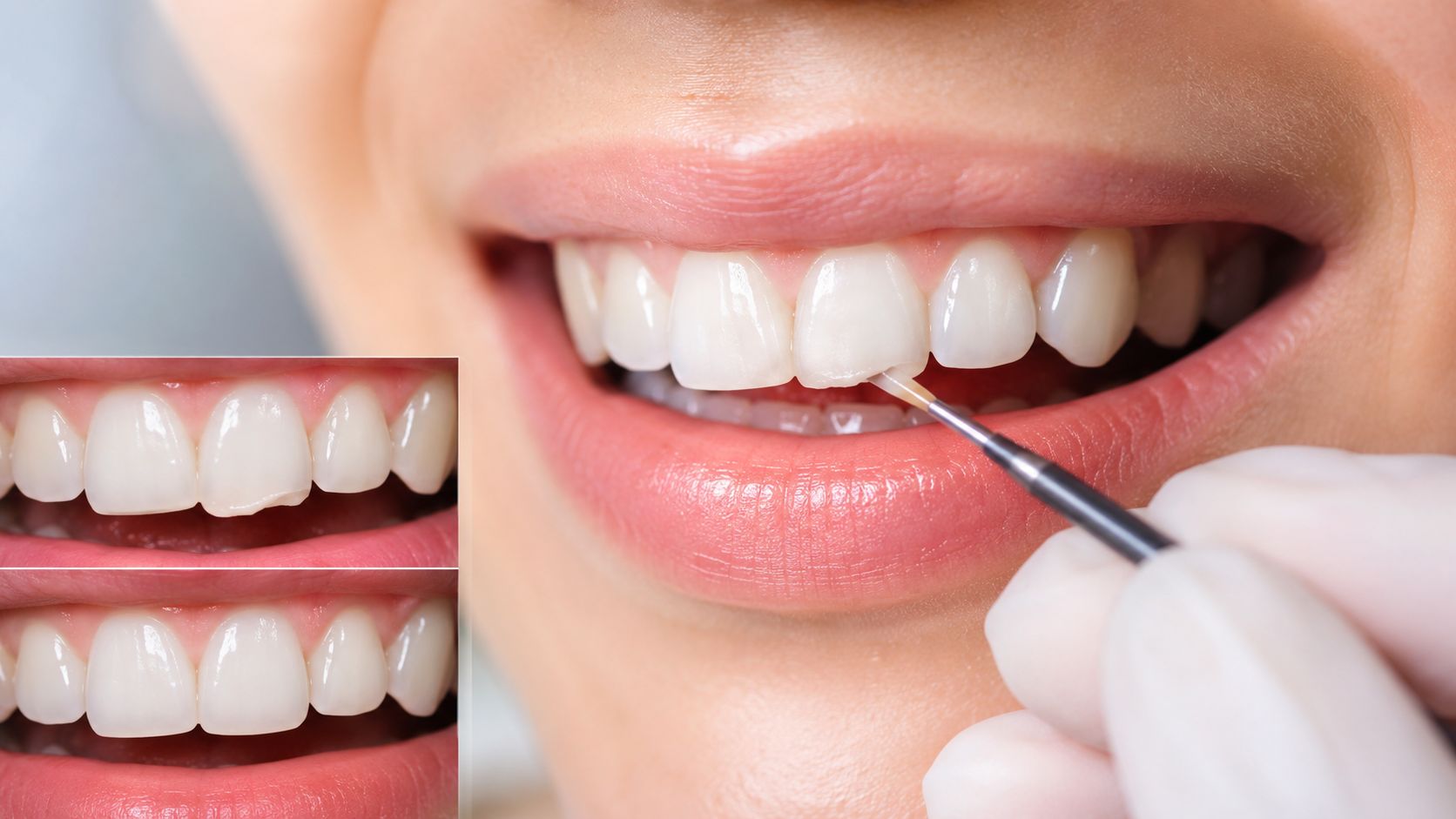
Chipped or uneven edges typically point toward veneers, which change visible shape and contour but require careful evaluation. Uneven proportions may need veneers, alignment, or both.
This comparison is a starting point, not a diagnosis. A dentist still needs to assess enamel, gums, bite, existing restorations, and the amount of movement required before recommending a combination.
When Combining Treatments Makes Sense
Combining treatments can make sense when several concerns overlap. For example, mild crowding may make teeth look uneven, staining may draw attention to the irregularity, and short or worn edges may keep the smile from looking balanced even after alignment.
Addressing those concerns in stages can produce a result that feels more coherent, and can reduce the temptation to over-treat: moving teeth into better positions may allow a dentist to preserve more natural structure and use veneers only where shape truly needs adjustment.
The goal is not to include every available treatment, but to use the smallest reasonable set of procedures for the desired result.
Why a Personalized Treatment Plan Matters
Two people can describe the same concern, such as a small smile or uneven teeth, and need very different plans. Differences in enamel, gum position, bite, tooth size, and previous dental work all affect the safest sequence. A personalized plan should explain what each stage is intended to accomplish, how the stages connect, and what alternatives exist, and should make room for your preferences about brightness, tooth shape, treatment time, and how much visible change feels comfortable. Natural-looking results depend on restraint, not simply on making teeth as white or uniform as possible.
How to Plan the Right Treatment Order
The sequence of a smile makeover can affect both the appearance and the durability of the final result. In many cases, tooth movement comes before cosmetic bonding or veneers, and whitening is planned before the final shade is selected. Still, the correct order depends on oral health, restorations, and the amount of movement involved.
When teeth need to move, alignment is commonly addressed before veneers are designed. Moving the natural teeth first can create a more stable foundation and may reduce the amount of reshaping needed later. Veneers are bonded to a planned tooth surface, so designing them before movement can make the original plan obsolete, or encourage unnecessary preparation.
Whitening is generally planned after alignment and before final veneers when the natural teeth will be visible beside the restorations, which allows the dentist and patient to choose a veneer shade that complements the brighter natural enamel. Whitening after veneers can brighten natural teeth, but it will not change the color of existing porcelain.
According to the American Dental Association's MouthHealthy resource on veneers, veneers cover only the front surface of a tooth, the procedure is not reversible, and a dentist must first treat any decay or gum disease before placing them.
Crowns, fillings, bridges, and older veneers may not respond to whitening in the same way as natural enamel, so their condition and color can affect whether they remain, are replaced, or are incorporated into the broader plan. An unsuitable sequence can lead to mismatched shades or cosmetic work that does not fit the final bite, so discussing the order at the first consultation is worthwhile even when a different sequence initially sounds more convenient.
Using Invisalign to Create a Better Foundation
Clear aligner treatment can be useful when the smile needs more than surface changes. By shifting teeth into planned positions, it may improve spacing, alignment, and some bite relationships before whitening or veneers are considered. Invisalign uses a series of removable clear aligners, with each tray applying planned pressure to guide teeth gradually, addressing crowding, rotations, or gaps within the limits identified by the treating dental professional.
Clear aligners may also help with selected bite concerns, including certain forms of overbite, underbite, crossbite, or open bite, depending on the specific relationship between the upper and lower teeth, jaw development, gum health, and the amount of movement required.
There is no universal Invisalign timeline. Mild spacing may take less time than significant crowding or a complex bite issue, and treatment can change if teeth do not track as planned. If veneers are planned afterward, the cosmetic stage should not be rushed simply to meet an original target date.
Most patients need a retainer phase after active movement ends, since teeth can shift over time, which matters in a smile makeover because movement after veneers can change the balance the treatment was designed to create.
Adding Whitening to Your Smile Makeover
Whitening can brighten natural enamel, but it is not a universal solution for every type of discoloration. The cause of the color change, the condition of the teeth, and the presence of restorations all matter. It is best viewed as one stage in the color plan, not as a last-minute add-on.
Professional teeth whitening is planned and monitored by a dental professional, while at-home products vary in strength, fit, and instructions. A dental evaluation can also identify discoloration that bleaching is unlikely to change, such as some internal stains or the color of restorations.
If veneers are planned on only some teeth, whitening natural enamel first helps establish the surrounding shade so the veneer color can be selected to blend with the treated smile.
Temporary sensitivity is a common concern during whitening, particularly when the teeth already react to cold or sweet foods.
Existing decay, worn enamel, and exposed roots should be evaluated rather than covered up with whitening products. Whitening results gradually soften as teeth encounter foods, drinks, and normal aging, so brushing twice daily, cleaning between the teeth, and attending dental visits support both appearance and oral health.
Choosing Veneers for the Final Shape and Color
Veneers are often the finishing stage because they can refine details that alignment and whitening cannot change. They may alter visible tooth length, width, contour, and shade, but they still require careful planning around the bite and the health of the teeth underneath.
Porcelain and composite veneers differ in material, fabrication, appearance, repair options, and expected maintenance. Porcelain is made outside the mouth and bonded in place, is strong and long-lasting, and tends to be more expensive. Composite is shaped directly on the tooth, may require less enamel removal and fewer visits, and is easier to repair but less stain- and wear-resistant.
Veneers can make teeth appear longer, soften sharp corners, fill limited spaces, or create more consistent edges, and can help balance differences in tooth width that remain after orthodontic treatment. Veneers are cosmetic restorations, not a substitute for treating disease: active decay, gum inflammation, heavy grinding, or weakened enamel can affect whether veneers are appropriate. Veneer shade should be chosen in relation to the whitened natural teeth and the number of teeth being treated, and this decision needs to happen before the veneers are finalized, since whitening will not change bonded porcelain afterward.
Timeline, Cost, and Realistic Results
A combined smile makeover can involve several appointments and periods of healing, adjustment, or observation. A common sequence begins with examination and planning, followed by any needed health treatment and orthodontic alignment, then whitening once teeth reach their planned positions, with veneers designed afterward and retention continuing after visible treatment is complete. Some patients need only a short whitening phase, while others spend months in aligners before cosmetic work begins.
Cost may reflect the number of aligners, the complexity of tooth movement, the whitening method, the material and number of veneers, laboratory work, replacements, and follow-up visits.
Preparatory care, such as treating decay or gum disease, may also be necessary before cosmetic procedures, so the lowest initial quote may not include every stage of a combined plan. New patients can request an itemized estimate that identifies what is included, and should ask about retainers, refinements, repairs, and future maintenance.
A smile makeover can improve color, alignment, shape, and proportion, but it cannot erase every biological or structural limitation. Teeth may still show natural variation and restorations may require maintenance. The most satisfying goal is usually a smile that looks like a healthier, more balanced version of you.
Caring for Your Combined Smile Makeover
The final stage of a smile makeover is not the day the veneers are bonded or the last aligner is removed. Brush twice daily with a soft-bristled brush and fluoride toothpaste, clean between the teeth every day, and pay attention to the gumline around veneers, where plaque can affect both comfort and appearance. Retainers should be cleaned and worn according to the instructions provided for your treatment.
Veneers can be affected by hard objects, biting forces, and habits such as opening packages with the teeth or chewing ice, which may increase the chance of chipping or loosening a restoration. Routine dental examinations and cleanings help identify gum inflammation, decay, worn edges, and changes in the bite before they become larger problems.
The longevity of a smile makeover varies with material, bite, hygiene, diet, habits, and regular professional care. Whitening is not permanent and may need maintenance, teeth can shift if retainers are not worn, and veneers may eventually need repair or replacement even when well cared for. Think of the result as something to maintain rather than a one-time permanent change.
Conclusion
A smile makeover that combines veneers, whitening, and Invisalign works best when each treatment has a defined purpose and the sequence is planned around your oral health. Alignment may create a better foundation, whitening can establish the natural shade, and veneers can refine shape and symmetry. Contact our Downtown Orlando office to schedule a consultation and find out what combination is right for your smile.
Frequently Asked Questions
Can Invisalign, whitening, and veneers be combined?
Yes, they can be combined when each treatment addresses a different concern and the teeth and gums are healthy enough for the plan. The order and need for each stage should be determined after an examination.
Which treatment usually comes first?
When tooth movement is needed, alignment commonly comes first. Whitening often follows alignment and precedes final veneer shade selection, but existing restorations and oral health can change that sequence.
Can whitening change the color of veneers?
No. Whitening affects natural enamel, not the color of porcelain or other existing restorations. Natural teeth are usually whitened before final veneer shades are selected.
Are veneers appropriate for crooked teeth?
Veneers may address limited changes in shape or minor spacing, but they are not a substitute for orthodontic treatment in every case. Significant crowding or bite concerns may need alignment first.
How long does a complete smile makeover take?
The timeline may range from a few appointments to several months or longer. It depends on the amount of tooth movement, the condition of the teeth and gums, the number of restorations, and whether refinements are needed.
Will a smile makeover look natural?
Natural-looking results depend on suitable proportions, a believable shade, healthy gums, and a design that fits your face and bite. Discuss how conservative or dramatic you want the changes to be before treatment begins.
How can the results be maintained?
Brush, clean between the teeth, attend regular dental visits, wear retainers as directed, and avoid habits that place excess force on veneers. Follow-up whitening or repairs may be needed over time.
About the Author
Fine Dentistry of Downtown Orlando is located at 429 N. Fern Creek Avenue, Orlando, FL 32803. The practice is led by Dr. Aileen Trivedi, DMD, FAGD, a Fellow of the Academy of General Dentistry and member of the American Dental Association and the American Academy of Cosmetic Dentistry, alongside Dr. Sergio Lascurain and Dr. Amanda Perez, providing comprehensive cosmetic and restorative dental care to patients throughout Downtown Orlando.
Disclaimer
The information provided in this article is for educational purposes only and does not constitute professional dental advice, diagnosis, or treatment recommendations. Whether a smile makeover is appropriate for you can only be determined through an in-person evaluation. Always consult your dentist with any questions regarding your treatment.
Blog Post Author

Contributed by DentalROI
DentalROI provides relevant dental content to help providers educate patients. The statements, services, and products referenced in this article have not been evaluated by the Food and Drug Administration, and they are not intended as a substitute for professional medical advice, diagnosis, or treatment. Always seek the advice of your dental provider with any questions or issues you may have. Specific recommendations may vary in different circumstances, so individual consultation is important.